

Alpaca's are of the Camelid family. They originate from
Bolivia, Chile and Peru in the Andes Mountains.

Alpaca's can be very expensive. Some have sold for over
$500,000. Alpaca's are used for their fiber which is hypo-
allergenic. The higher the micron count, the softer the fiber,
and the more expensive it is. Cria fiber is the most expensive
and the softest.
Cria's are baby alpaca's. At around six months of
age, or around a weight of sixty pounds, a cria can be weaned.
Weaning is separating a mother and cria so the cria can become
independent.

Females can be bred again as soon as two weeks after giving birth. The
gestation period of alpacas is about 11 and a half months. Twins are
very rare in alpaca's, and if it happens usually only one survives.
Males can be kept for breeding or they can be gelded and kept as pets,
4-H animals, or herd companions. Breeding males are valued
based on their micron count, the crimp and density of their fiber, their
conformation, their attitude, and their color. Some colors are more
desirable than others. White isvery desirable but hard to breed for.
White should not be bred with white. Theremust be color in the backround
or it can cause the cria to be deaf or blind.
Alpaca's only have front teeth on the bottom to pull up grass to eat. They have
three stomachs, and chew cud like cows. They have molars in the back of their
mouths to thoroughly chew their food. They have two toes, with toenails, on each
foot, and pads on the bottom to protect their feet from the mountains they
originated from.
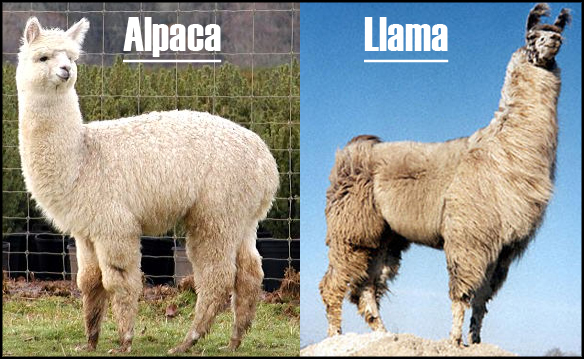
Alpaca's are different than llama's because they are smaller, they have softer, more
expensive fiber, they cannot be pack animals, they have better attitudes, and they
have different shaped ears. Llama's have banana shaped ears.